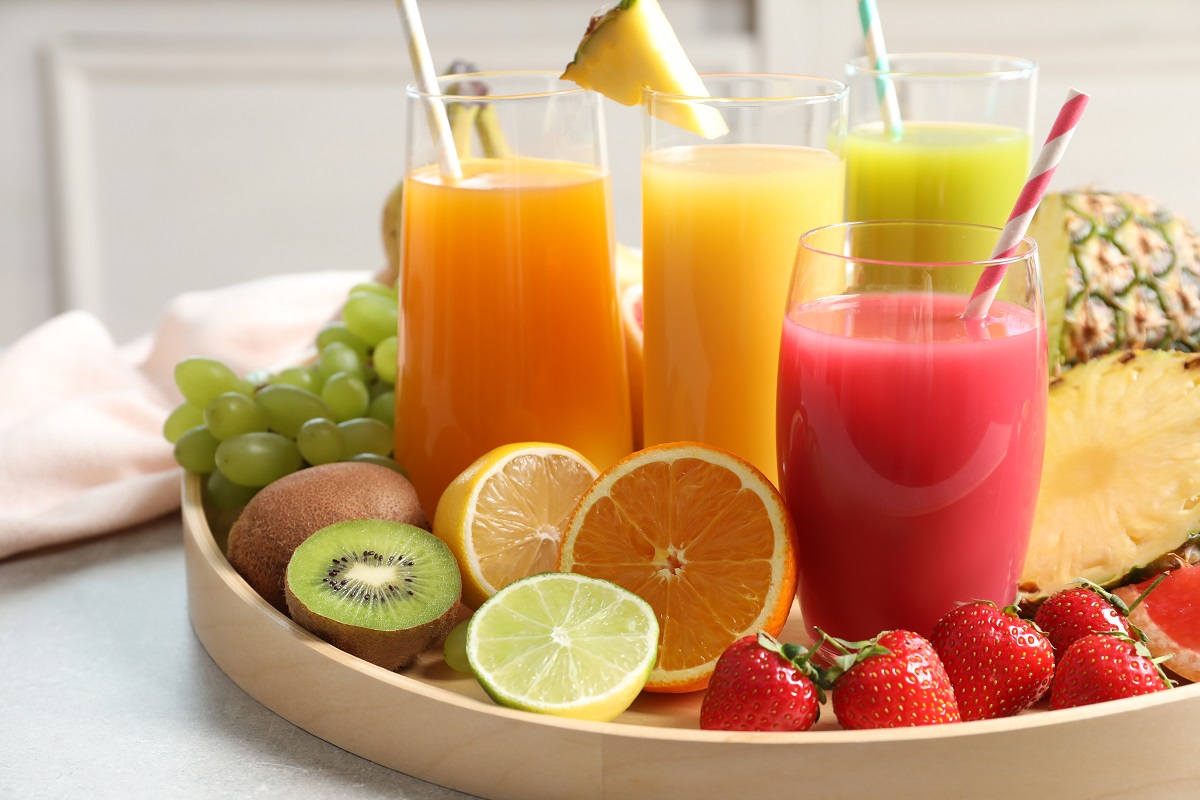
Does your body benefit in the same way if you drink a nice big glass of fresh-squeezed juice instead of eating a fresh piece of fruit? Not quite.
According to the Mayo Clinic, juicing probably is not any healthier than eating whole fruits and vegetables. Juicing extracts the juice from fresh fruits or vegetables. The resulting liquid contains most of the vitamins, minerals and plant chemicals found in the whole fruit.
If you look at the two in terms of nutrition, the main difference is fiber content. Whole fruit has it and fruit juice does not, unless it is specifically added.
If you are someone who is trying to manage weight or lose weight, there can be three issues with fruit juice:
• It takes longer to eat a piece of fruit than to drink the equivalent calories as juice. One orange equals 60 calories and one eight-ounce cup of orange juice contains 120 calories.
• People tend to drink juice while also eating something else, whereas when you eat a piece of fruit, you’re usually not eating or drinking anything else.
• Even though both whole fruit and fruit juice are high in sugar, the fiber in whole fruit controls the effect of dietary sugar on your blood-sugar level. This is important because increased blood sugar makes your body to pump out insulin, a hormone that can make you hungrier in the long run.
• If you enjoy fruit juice, make sure that you buy brands that say 100 per cent fruit juice with NO added sugars. Trim those calories by diluting juice with water. Most of all, do not drink it out of a huge glass.
And here’s one last tip: Choose juices that are from a type of fruit you normally do not eat – like pomegranate or cranberry.