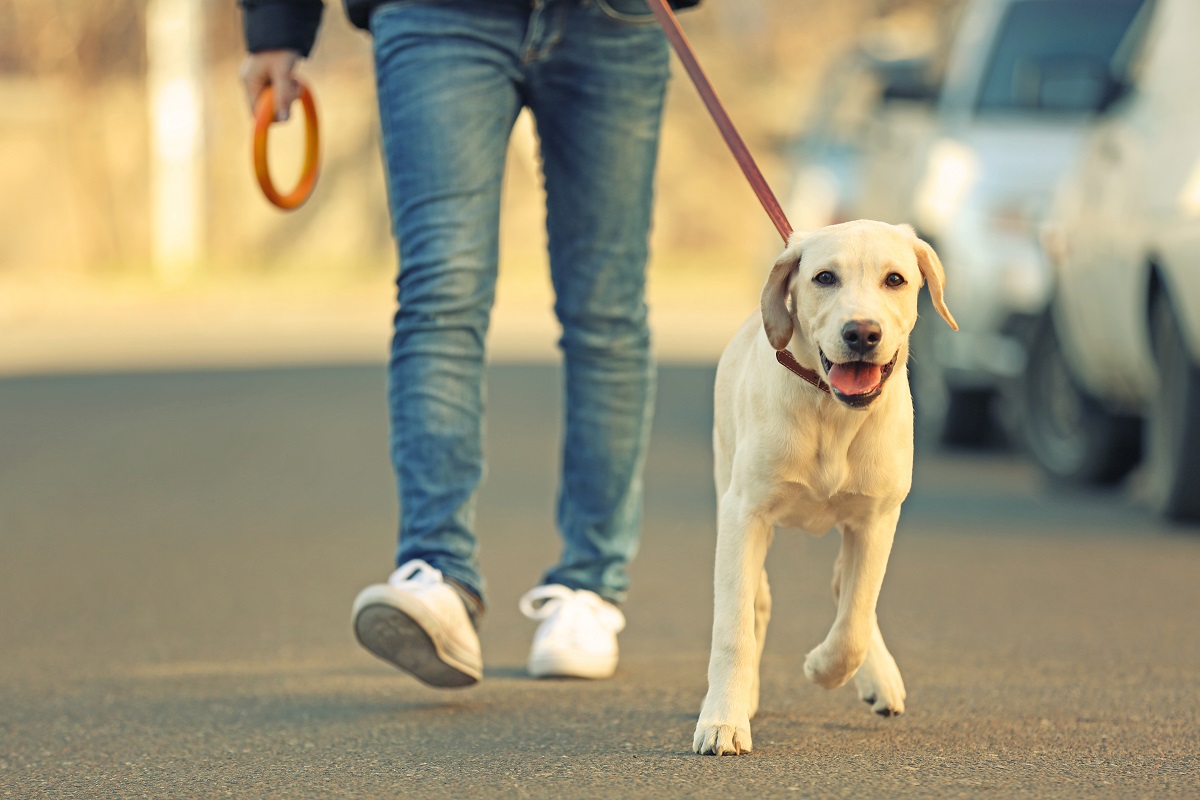
You have been meaning to start getting more exercise every day, but somehow the right motivation just hasn’t come along, right? Well, are you a dog owner? How about helping your family pet stay in good shape?
According to Web MD, many Fido’s out there are baling one of man’s worst enemies — obesity. Up to 40 percent of dogs in the U.S. weigh too much. Like people, overweight dogs are at risk for health problems, from arthritis to heart disease. This is one challenge you and your pet can face together.
The first stop is a trip to the vet to evaluate if your dog has any heart, lung, or other health problems. It’s also important to check for signs of arthritis or musculoskeletal disease. A dog with inflamed joints or ligaments may require a low impact exercise plan.
Develop a workout routine that’s realistic, considering your job schedule and other demands on your time. Also, consider your dog’s needs — working breeds and juvenile dogs usually need a lot of exercise. Start with a short-term goal of exercising just five or 10 minutes every day. Gradually work up to 30 minutes on most days of the week. Keep in mind that deep-chested breeds, such as Danes or Doberman pinschers, should not exercise right after meals.
When exercising with your dog, watch for signs that one of you may be overdoing it. You may be working too hard if you are too breathless to carry on a conversation. Your dog may be overworked if he is breathing fast, panting excessively, staggering, or refusing to follow you. If either of you are sore or exhausted for hours after a workout, make it easier next time. Not all dogs are built to jog. Greyhounds, for example, are pros at short-distance sprinting but can become fatigued during long-distance runs. If you want to jog with your dog, choose a breed that is suited to distance-running, such as a Labrador. Wait until your pup is full grown and then gradually build up to a 30-minute excursion. This should include five minutes of warm-up, 20 minutes of jogging, and five minutes of cool down.
Remember that dogs can’t sweat, so avoid the hot mess of the day and stop if your dog is lagging behind you.
Just like people, dogs are susceptible to dehydration and heat exhaustion. On hot days, bring a water bottle and foldable drinking bowl or sticking to places with a public water source. Signs of dehydration in dogs include excessive panting, confusion, weakness, and collapse. Brachycephalic or short-faced breeds, such as bulldogs and boxers, are especially vulnerable because they don’t pant efficiently.