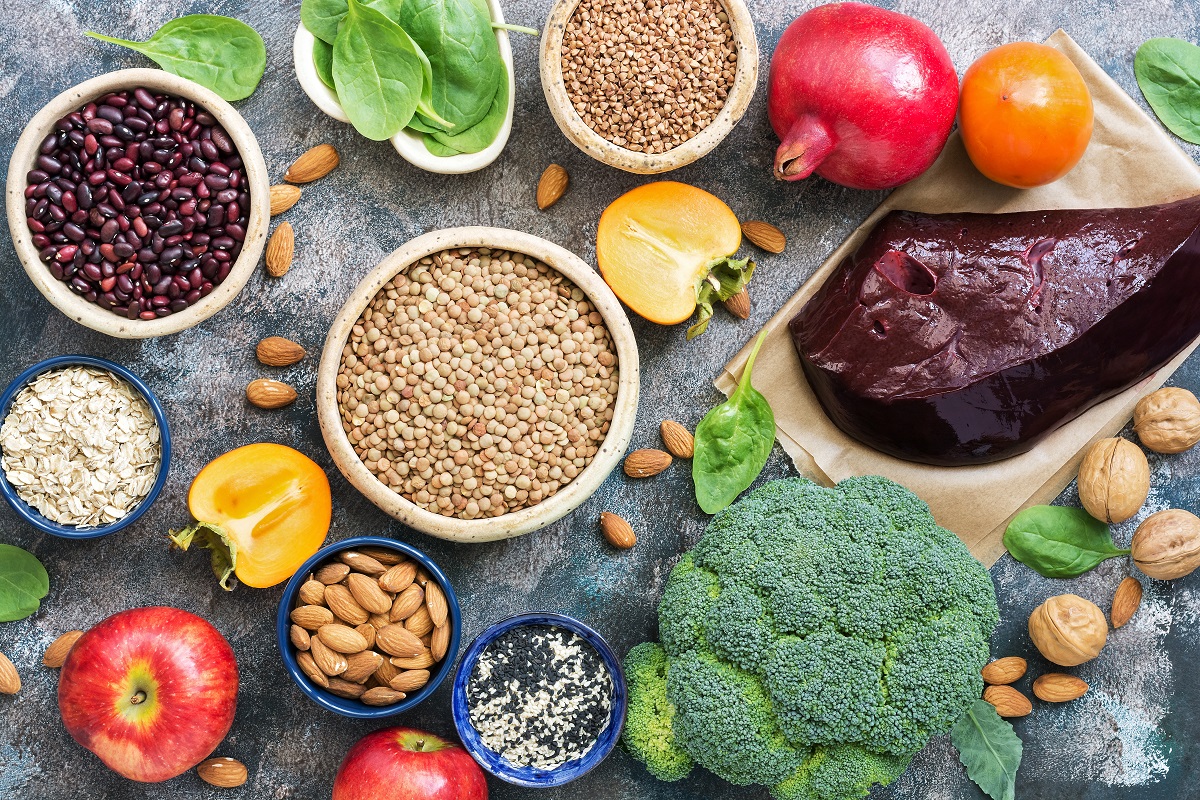
Iron deficiency is a condition resulting from too little iron in the body. Iron deficiency is the most common nutritional deficiency and the leading cause of anemia in the United States according to the Center for Disease Control and Prevention (CDC).
Without sufficient iron, your body can’t produce enough hemoglobin, a substance in red blood cells that makes it possible for them to carry oxygen to the body’s tissues. As a result, you may feel weak, tired, and irritable.
If you have been feeling a little run down lately and finding it tough to concentrate at work, or maybe you find yourself coming down with every little cold or flu bug that makes its way through the office, it might be a good idea to review your diet and see if you have been eating foods that provide the amount of iron you need, since our bodies can’t produce iron itself.
The CDC tells us that in general, you can eat a healthful diet that also includes good sources of iron. Such a diet includes fruits, vegetables, whole grains, fat-free or nonfat milk and milk products, lean meats, fish, dry beans, eggs, and nuts. It should also be low in saturated fat, trans fats, cholesterol, salt, and added sugars.
Dietary iron has two main forms: heme and nonheme. Plants and iron-fortified foods contain nonheme iron only, whereas meat, seafood, and poultry contain both heme and nonheme iron. In addition to a healthful diet that includes good sources of iron, you can also eat foods that help your body absorb iron better. For example, you can eat a fruit or vegetable that is a good source of vitamin C with a food or meal that contains non-heme iron. Vitamin C helps your body absorb the non-heme iron foods you eat, especially when the food containing nonheme iron and the vitamin-C rich food is eaten at the same meal.
Here are some of WebMD’s top food picks to add iron to your diet:
• Very good sources of heme iron, with 3.5 milligrams or more per serving, include:
– 3 ozs of beef or chicken liver
– 3 ozs of clams, mollusks, or mussels
– 3 ozs of oysters.
• Very good sources of nonheme iron, with 3.5 milligrams or more per serving, include:
– Breakfast cereals enriched with iron
– One cup of cooked beans
– One-half cup of tofu
– 1 oz of pumpkin or sesame seeds.
However, when your body lacks iron to such a degree that you could be anemic, it’s time to visit your doctor to get a proper diagnosis. It is important to be diagnosed by your healthcare provider because iron deficiency can have causes that aren’t related to your diet. Your healthcare provider’s recommendations will be specific to your needs.