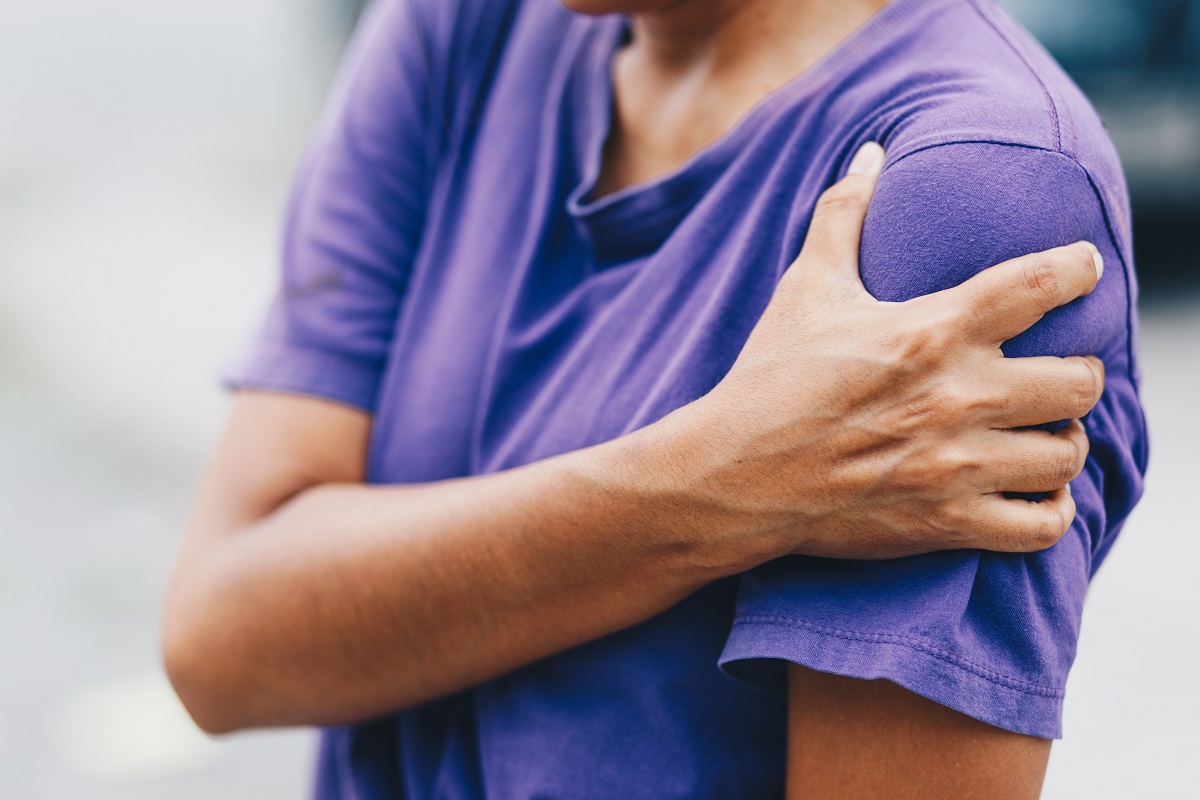
A shoulder separation is the result of a sudden, traumatic action that either is caused by a direct blow to the shoulder, or from a fall with an outstretched hand.
A shoulder separation is when you experience an injury to what is called the acromioclavicular (AC) joint, which is on top of your shoulder. The shoulder joint is the junction of your collar bone (clavicle), your shoulder blade (scapula) and your upper arm bone (humerus). Your scapula and clavicle form the socket and the humerus has a round head that fits into the socket. When your shoulder separates, the injury tears one of the ligaments that connects the collar bone to the shoulder blade.
Symptoms, Diagnosis, Grades of Injury:
Type 1: There is a painful injury to the capsule that surrounds the AC joint and the bones are not out of poison.
Type 2: Accompanied by pain, type 2 separated shoulder may have a small bump over the injury, which is caused by a tear in the ligament that stabilizes the clavicle.
Type 3: Type 3 shoulder separation has a much larger bump over the injured AC joint.
Type 4: With this type of shoulder separation the clavicle is pushed behind the AC joint.
Type 5: Here the muscle above the AC joint is punctured by the end of the clavicle causing a significant bump over the injury.
Type 6: Very rarely, the clavicle is pushed downwards, and becomes lodged below the scapula.
Treatment and Rehab:
• Ice the joint every four hours for 15-30 minutes at a me.
• Rest the joint to minimize pain and allow healing. Use a sling to support your arm.
• Anti-inflammatory medications will aid in decreasing the pain and inflammation (as prescribed by your physician). Surgery is only required with type 4, 5, and 6 shoulder separation. Type 3 shoulder separation may or may not require surgery. It will depend upon your physician, type of injury and if you are an athlete participating in sports