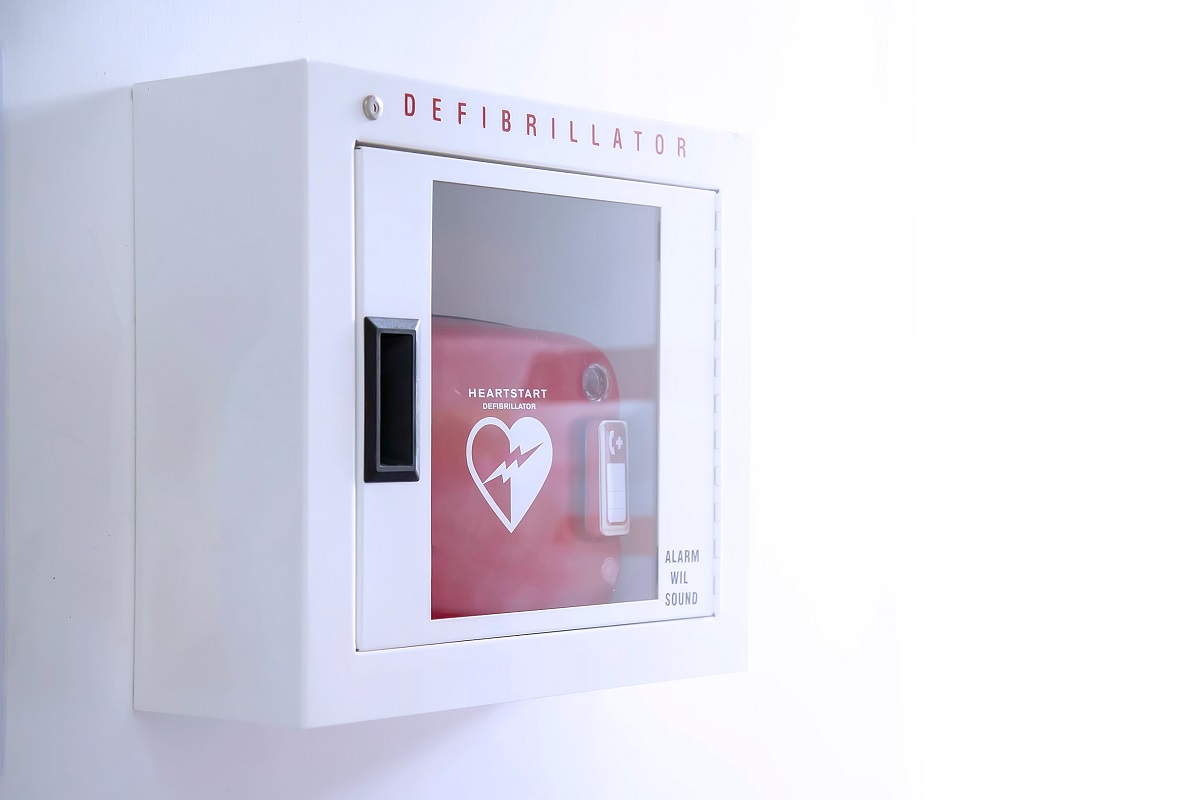
As you walk through many shopping malls or other public buildings today you will see these strange pieces of life saving equipment known as Automated External Defibrillators or AEDs.
But what are they exactly and what do they do? Who can operate them? These are all good questions that wwwp.medtronic.com is going to help us answer:
What is an AED?
Unlike the models of defibrillators intended for use by health care professionals (and the ones seen most oen on TV), AEDs are designed to allow people with minimal training to respond to cardiac emergencies, particularly sudden cardiac arrest (SCA). AEDs are about the size of a lunch box and have adhesive electrode pads that deliver brief, but powerful electrical stimulation to the heart, interrupting the abnormal rhythm and helping to restore the heart’s natural rhythm. The devices are pre-programmed with the expertise needed to analyze the heart’s electrical funcon. They also use voice prompts and screen displays to instruct the user on how to operate the device.
Who can use an AED?
Many people around the world are using AEDs, including police and security officers, firefighters, athletic trainers, flight attendants and lifeguards. Newly developed AEDs offer greater ease of use and are designed to allow trained people to respond to cardiac emergencies in public places. Anyone who has completed a short (usually about four hours) training course that covers both AED use and cardiopulmonary resuscitation (CPR) can use an AED.
How safe are AEDs?
AEDs are very accurate and are designed not to deliver therapy to someone who is not in cardiac arrest. When used properly and with appropriate precautions, AEDs are very simple to operate and pose no risk to either the rescuer or the parent. Is sudden cardiac arrest the same as a heart attack? No. A heart attack occurs when a blood vessel feeding the heart itself is blocked by plaque or a blood clot. The longer the blood flow is interrupted the more extensive the damage done. The majority of heart attack victims survive the first attack. Sudden cardiac arrest involves problems with the heart’s electrical system, which can cause it to stop being entirely. When that happens, blood flow to the rest of the body is interrupted, and the vicm passes out.
Defibrillation is the only known treatment for this condition, and AEDs are the quickest and most efficient way to reach individuals with this lifesaving therapy.
For more information on AED training, visit your local community center.